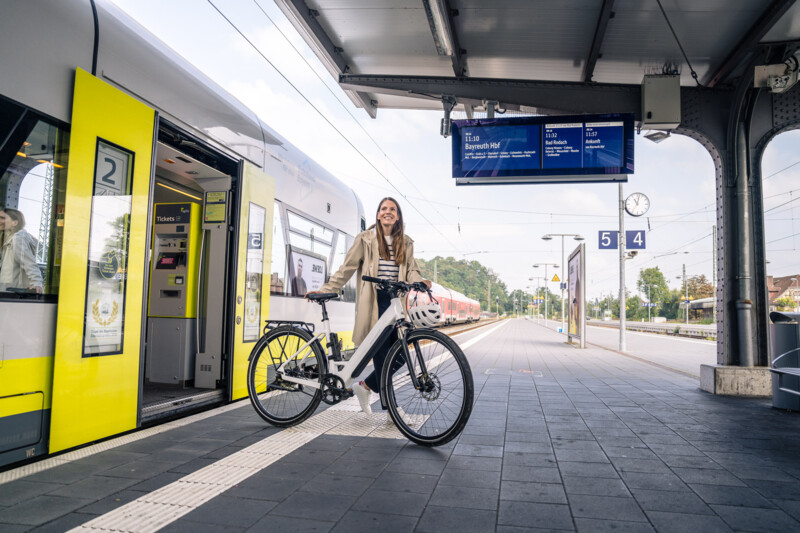
No driver's license? No problem! Cycling to work opens up the job market.
Many companies attract employees with the classic company car, but the best "company vehicle" sometimes has two wheels: the company bike—a bicycle leased by the Employer for employees—has often been underestimated by companies up to now. There is untapped potential here—and not just in the city.
New generation, new mobility – recruiting outside the big city
Company bikes could become an unexpected trump card, especially when it comes to recruiting staff. This is because the mobility habits of young people are changing. Take driving licenses, for example: only 41% of under-20s in Germany now have a driver's license—ten years ago, the figure was much higher (source: focus.de). Many young people are putting off the expensive process of getting a driver's license or are foregoing it altogether, especially in cities. The car is losing its appeal as a status symbol, whether for financial reasons or environmental awareness.

Many are dissatisfied with public transportation
Doch was in urbanen Zentren vielleicht funktioniert, bleibt andernorts Wunschdenken: Laut Mobilitätsbarometer 2024 sehen 80 % der Menschen in Deutschland seit fünf Jahren keine Verbesserung ihrer ÖPNV-Anbindung (mehr zur Studie).

One in three people are dissatisfied with the local offer – the main criticism is that services are too infrequent, rather than the distance to the bus stop. In short, even where there is a bus stop nearby, there are often no connections during off-peak hours or the connections are not suitable. For young talents without a car, the commute to work quickly becomes an obstacle. This is where a company bike fills the gap – reliable, predictable, and independent of timetables.
Talent outside the big city: mobilize instead of lose
A bike provided by the Employer also enables applicants without a car to commute to work every day. This is a tangible competitive advantage when it comes to recruiting young professionals in rural areas, which many companies have not yet recognized. Those who advertise a company bike proposal in structurally weak areas could attract precisely those young talents seeking mobility who would otherwise look elsewhere. And the same applies in urban areas: Generation Z cares about climate friendliness – a bike benefit is likely to be more popular with sought-after young professionals in the city than a parking space for a company car.

Better than waiting: Bikes beat rush hour
Even in areas with good public transport, company bikes offer advantages: they fill gaps in everyday life that buses and trains cannot cover—from the direct route to the office to spontaneous customer appointments. Those who don't have to wait for the next train or search for parking spaces in heavy rush-hour traffic often reach their destination faster and more relaxed.
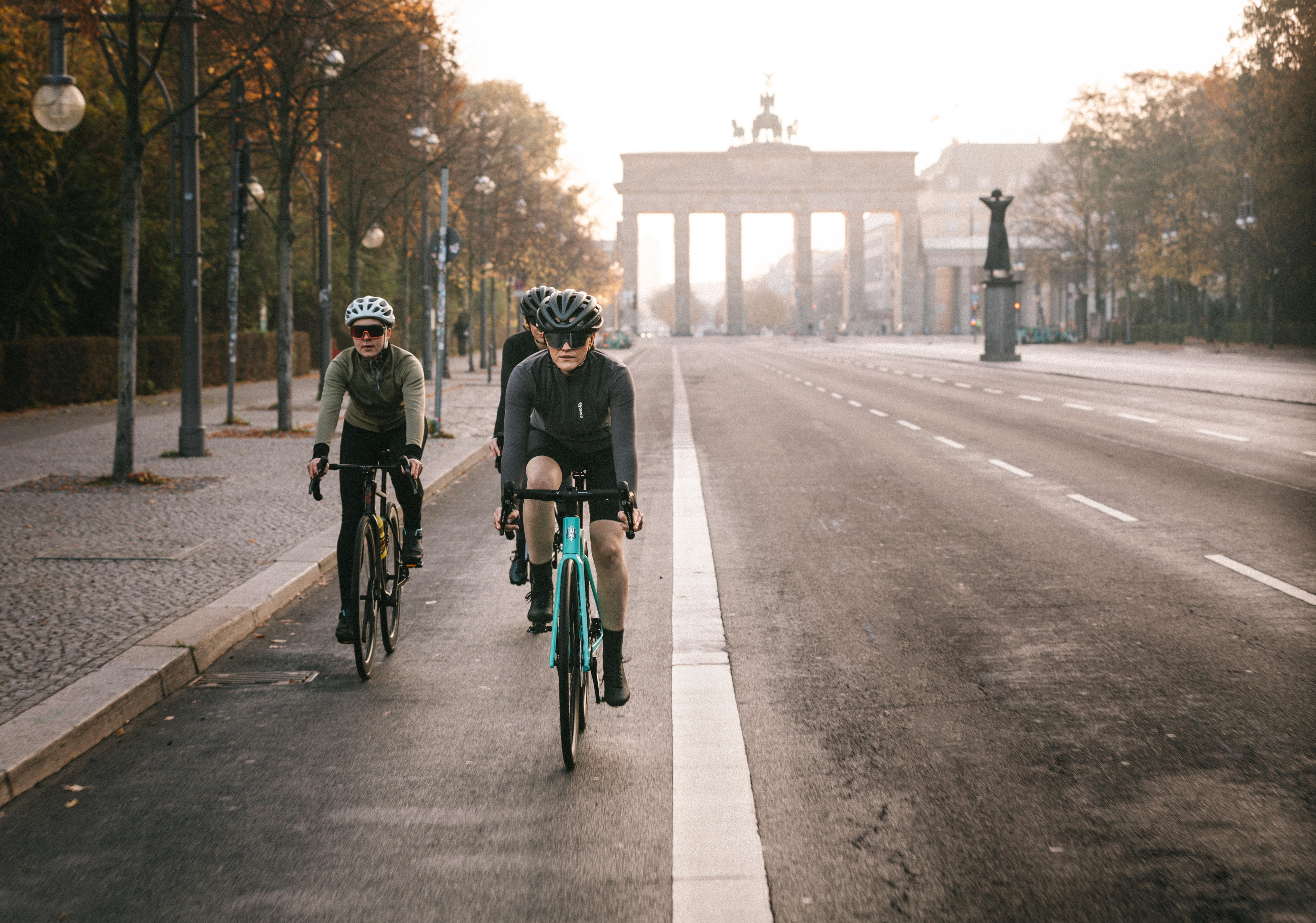
For employers, this means that bikes are becoming a flexible component of urban mobility, not only improving accessibility but also appealing to new applicants who consciously choose to live without a car. This sends a strong signal, especially in large cities: you are attracting talented individuals who are rethinking mobility—and retaining them with a benefit that visibly fits their lifestyle.
Open up the labor market – with clear mobility options.
So cycling to work isn't just a nice perk. It opens up access to applicants without a car or driver's license and makes locations flexibly accessible—in rural areas despite sparse public transportation, and in cities as the fastest "last mile" solution. Data shows that half of all car journeys are shorter than 5 km, and e-bikes are often the fastest means of transportation from door to door for distances of up to around 7.5 km – exactly the sweet spot for short commutes and customer appointments (source: U.S. Environmental Protection Agency). A real market opener for your recruiting.
Expanding the job market now
Let's briefly discuss how cycling to work can mobilize talent at your company—with company bikes, a small company fleet, and secure parking and charging points. We'll show you the options, the costs, and the quick wins—lean, digital, and as a simple plug-and-play solution.